Go to program
program
Jan
21

Open HausThe Gyuto Monks Tibetan Tantric Choir

Series

(Transmissions)
Soundwalk Collective

Summary

Where

Reethaus

When

Sunday, January 21, 2024
14:00-22:00

What

Listening Experience

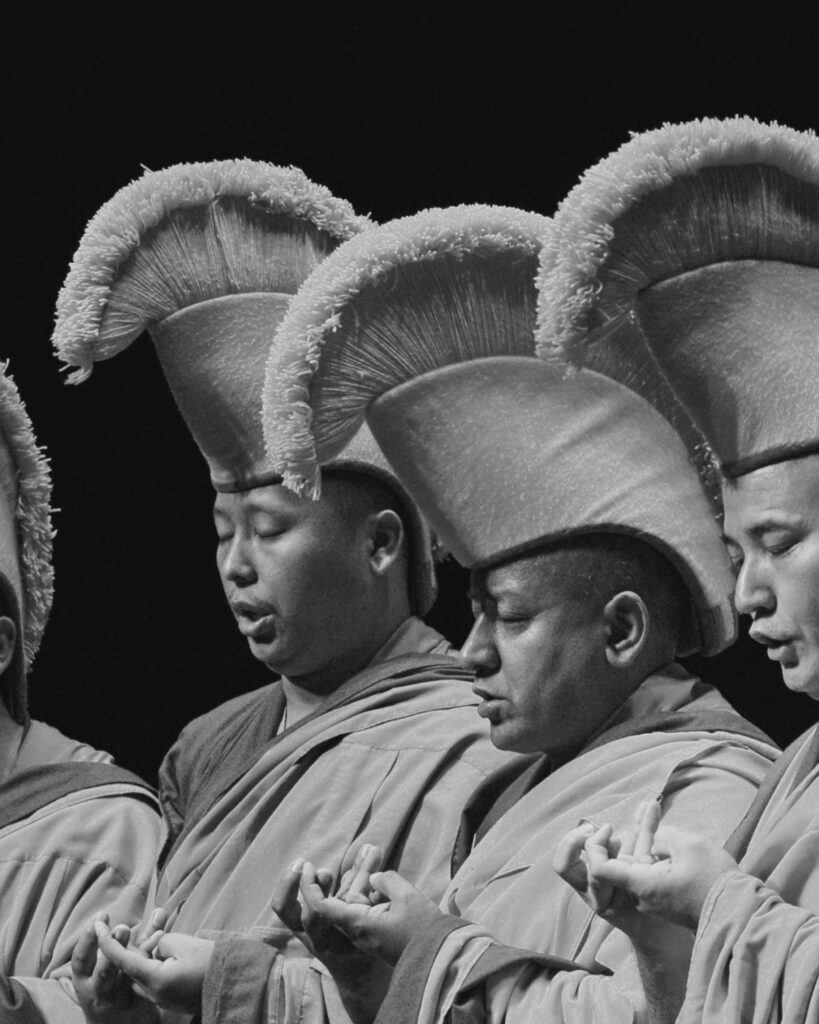
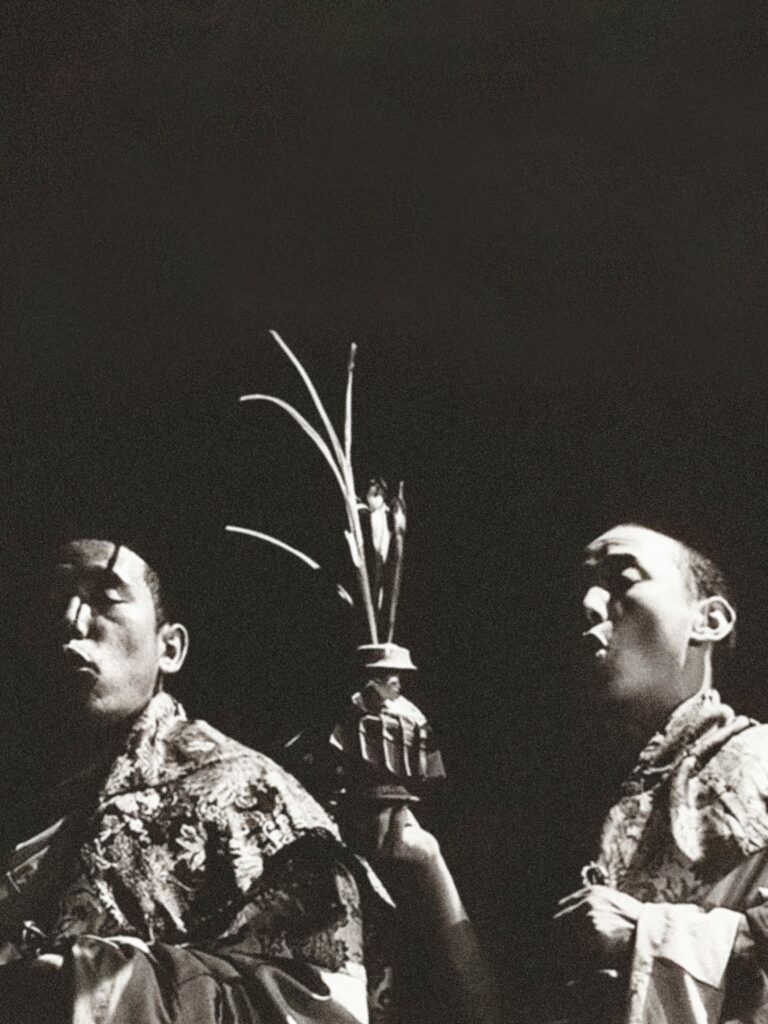
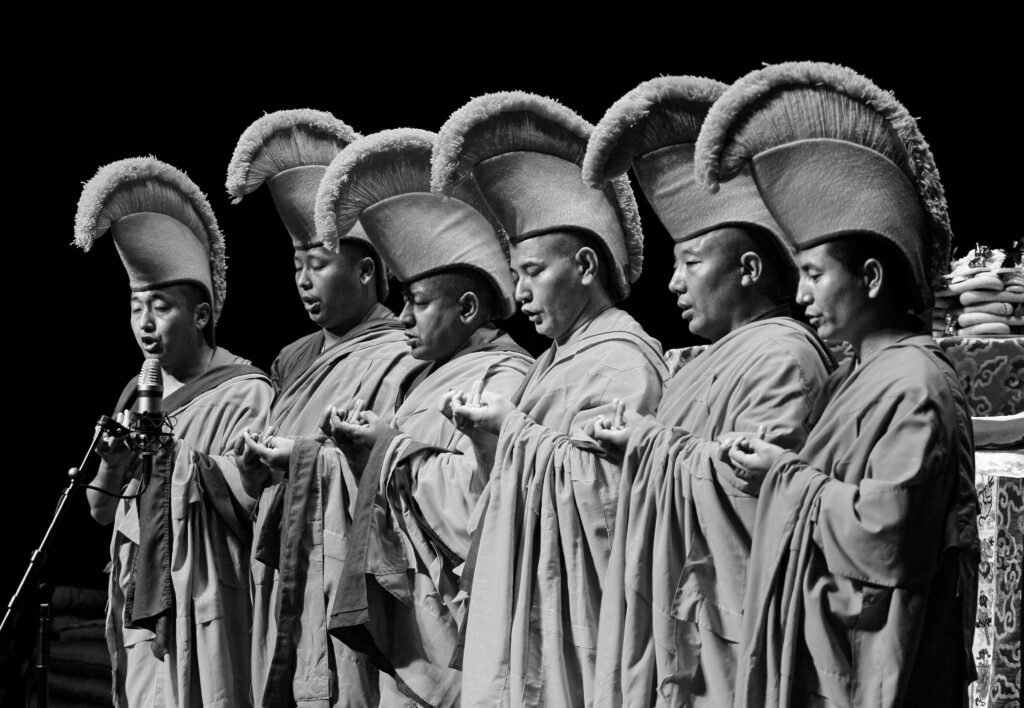
“They will rattle your bones”, Mickey Hart said about the Gyuto Monks Tibetan Tantric Choir. No small praise coming from the drummer of the Grateful Dead. To launch our 2024 program at the Reethaus, Soundwalk Collective presents Hart’s 1986 recording of the choir, part of the Gyuto Order originating in Tibet in the 15th century. 

Their chanting was never heard outside the context of their temples until after the Chinese annexation of Tibet in 1959, when the order fled to India. At that point, their prayers became political, expressive of the Tibetan resistance, and a spiritual rallying cry for repressed peoples. “Close your eyes, leave behind your prejudices,” Hart said, “After an hour of their sound, you’ll be different, cleaner, lighter.” 

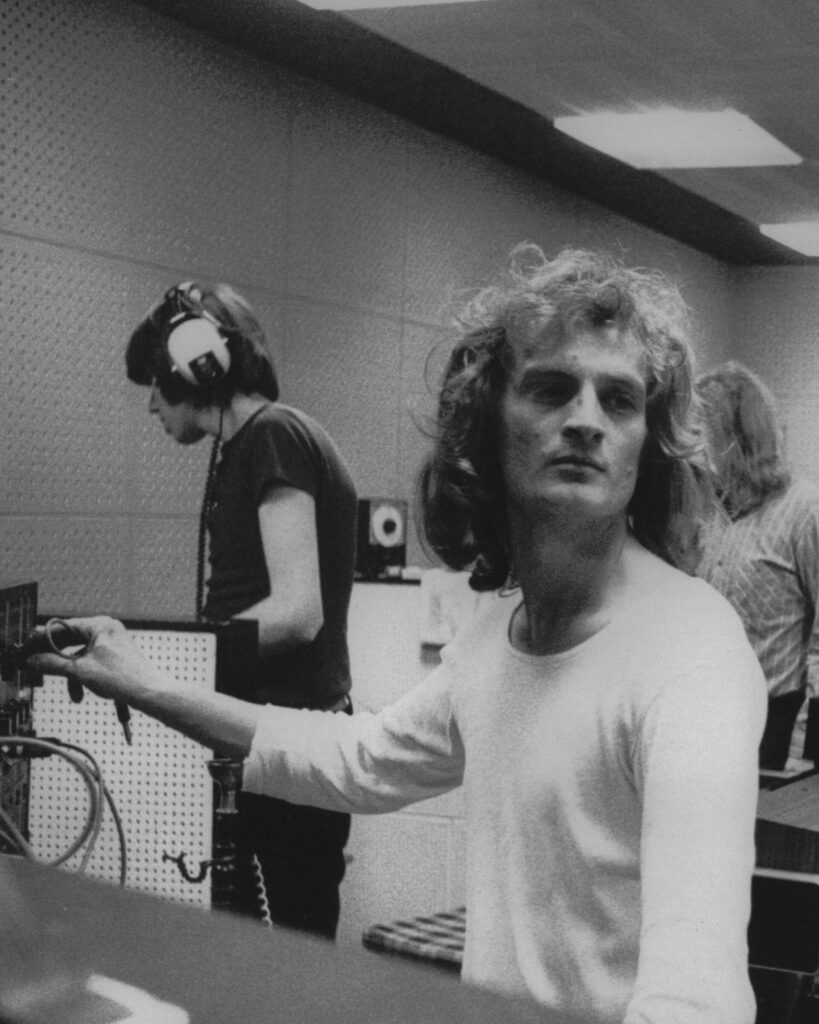
In 1985, the Gyuto Monks Tantric Choir came to the attention of the Grateful Dead’s Mickey Hart, who brought them to his California studio to record the incredible multiphonics of their sacred rituals. The monks gave Hart permission to overdub their voices, achieving the huge sound of the 100-voice choir as one might hear at their mountain monastery – with each monk’s voice singing a complete, extraordinary chord.

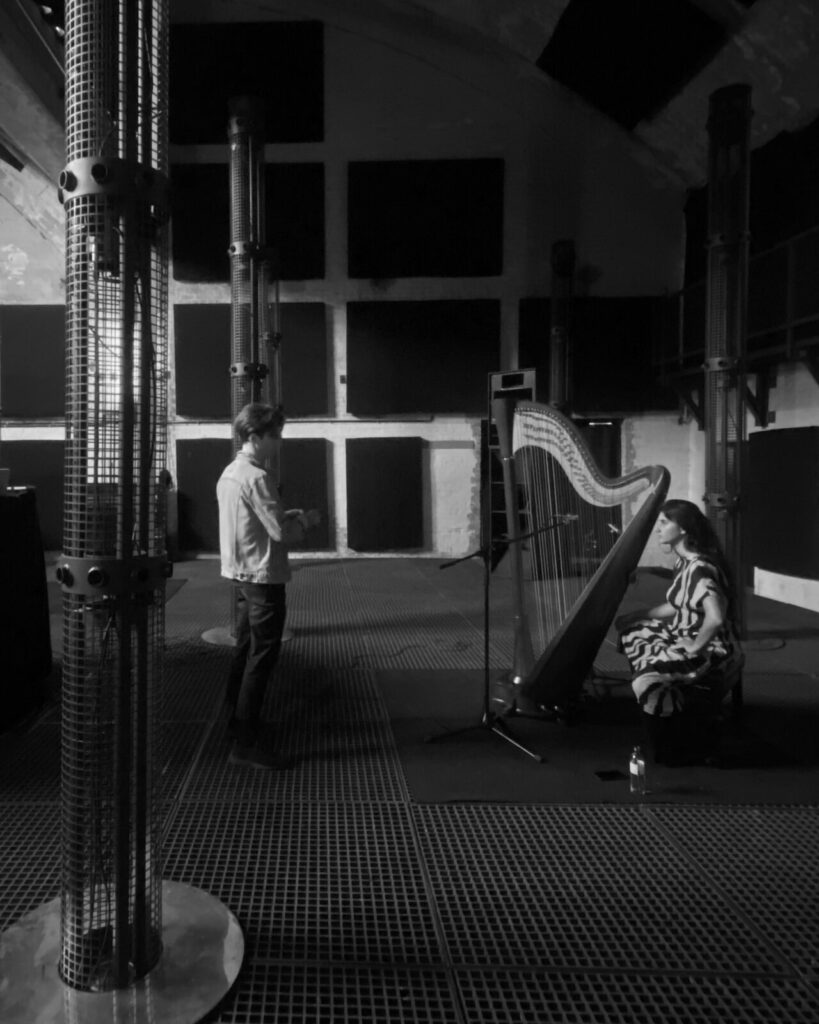
Heard on January 21 over the 360-degree spatial sound system of the Reethaus, the  tantric choir produces a rhythmic chewing sound at the lowest range of the human voice, interspersed with sounds from bells, drums, cymbals and horns. Melody is not the point here—nor even musicality—but rather the body’s physical response to the grating repetitions, and the spiritual strength that follows from becoming one with their movements. 

“The chanting heard on this recording is prayer, not performance,” the original record sleeve reads. ”Whenever this recording is played its prayers are effectively said anew — though their power depends less upon mechanistic reproduction than on the degree of attention and compassion with which you, the listener, join in the experience.”

Series

(Transmissions)

Soundwalk Collective invites key influences and frequent collaborators featured across their extended body of work to participate in a series that samples from the past 60 years of sonic arts. Reflecting a personal view on collaboration as an essential aspect of the creative process, the series presents a broad summary of the sonic landscapes that they have developed over the past two decades. Seminal masterworks and newer pieces blend into a cohesive yet varied ensemble that spans musique concrète, performance art, contemporary and mystical music. All of these genres have in common a meditative dimension, a transitional nature that has been at the core of Soundwalk Collective’s work.

Other events of the series:

Featured

Gyuto Monks Tibetan Tantric Choir

Founded in Tibet in 1475, the Gyuto Order is one of the great monastic institutions of the Gelug or “Yellow Hat” school of Tibetan Buddhism. Their tradition of overtone singing, or chordal chanting, was never heard outside the context of their temples until after the Chinese annexation of Tibet in 1959, when the order fled to India with its foremost spiritual leader, the Dalai Lama. This chanting gained renown in the West following the release of recordings made by David Lewiston in 1974 and Mickey Hart in 1986. In 1995, a group of Gyuto monks traveled to the United States and performed during a series of concerts with the Grateful Dead. Under the name Gyuto Monks Tantric Choir they appeared on the Mickey Hart/Planet Drum album “Supralingua,” as well as the Van Halen album “Balance.” Today, the Gyuto Order is based in Sidhbari, near Dharamsala, India, and consists of about 500 monks.

Featured

Mickey Hart

Mickey Hart is an American percussionist who is best known as the drummer of the Grateful Dead, playing with the band on and off from the 1960s until their retirement in 1995. Since the 1990s, he has taken a great interest in musical traditions from across the globe, promoting the genre of world music and winning the first ever Grammy award in that category in 1991 for “Planet Drum,” an album featuring percussionists from Puerto Rico, India, Nigeria and Brazil.

Featured

Soundwalk Collective

Composed of contemporary artist Stephan Crasneanscki and producer Simone Merli, Soundwalk Collective integrates sound, film, and mixed media in site- and context-specific artworks. Evolving along multi-disciplinary lines, they have cultivated long-term creative collaborations with artist and writer Patti Smith, late director Jean-Luc Godard, photographer Nan Goldin, choreographer Sasha Waltz and actress Charlotte Gainsbourg, among others.

Central to their artistic philosophy is the exploration of sound as a medium to navigate and interpret the complexities of human experience and environment. In doing so, their practice engages in the narrative potential of sound across mediums such as art installations, dance, music, and film. A unique artistic approach to sound ties together the different forms in which Soundwalk Collective work. Whether in original composition or the use of archival recordings, they treat sound as material that is both tactile and poetic. This allows them to create layered narratives that address ideas of memory, time, love and loss. Their original score for Laura Poitras’s All the Beauty and the Bloodshed contributed to the film’s Golden Lion win at the Venice Film Festival. In 2026, Soundwalk Collective collaborated with curators Hans Ulrich Obrist and Ben Vickers on the Holy See pavilion at the Venice Biennale.