This event has now sold out. However, we always reserve places for our Friends of Reethaus. With the annual pass, you’ll enjoy guaranteed access to the event, an exclusive time slot from 12:00–14:00, and early access to additional cultural events and live performances.
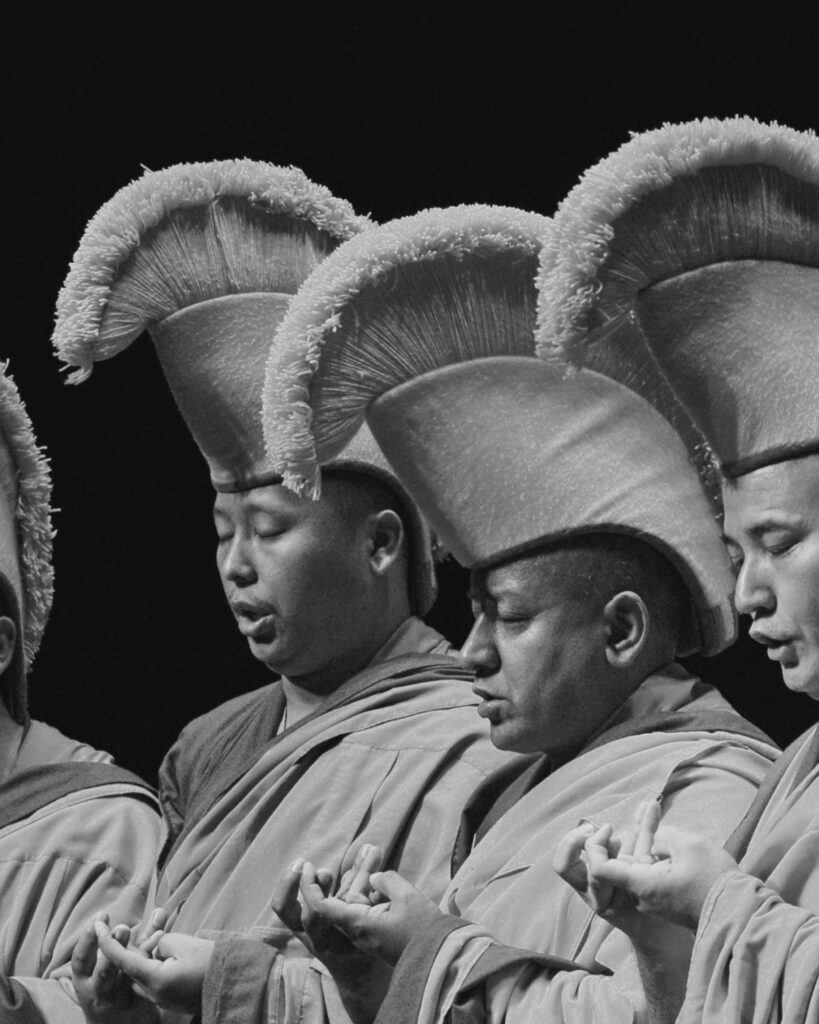
“They will rattle your bones,” said Mickey Hart, the drummer of the Grateful Dead, of the Gyuto Monks Tibetan Tantric Choir. Soundwalk Collective is pleased to once again offer their indelible chants in this annual event at Reehaus, part of our calendar of contemporary rituals. “Close your eyes, leave behind your prejudices,” Hart said. “After an hour of their sound, you’ll be different, cleaner, lighter.”
The overtone chanting of these Tibetan monks, part of the Gyuto Order originating in Tibet in the fifteenth century, was never heard outside the context of their temples until after the Chinese annexation of Tibet in 1959, when the order fled to India. At that point, their prayers became political, expressive of the Tibetan resistance, and a spiritual rallying cry for repressed peoples.
In 1985, the Gyuto Monks Tantric Choir came to the attention of the Grateful Dead’s Mickey Hart, who brought them to his California studio to record the analeptic multiphonics of their sacred mantras. The monks gave Hart permission to overdub their voices, achieving the huge sound of the 100-voice choir as one might hear at their mountain monastery — with each monk’s voice singing a complete, extraordinary chord.
On January 25, over the 360-degree spatial sound system of the Reethaus, we will hear the tantric choir produce a rhythmic bass drone at the lowest range of the human voice, interspersed with sounds from bells, drums, cymbals and horns. Melody is not the point here — nor even musicality — but rather the body’s physical response to the marching repetitions, and the spiritual strength that follows from feeling one’s thoughts dissolve into their vocal movements.
“The chanting heard on this recording is prayer, not performance,” the original record sleeve reads. “Whenever this recording is played its prayers are effectively said anew — though their power depends less upon mechanistic reproduction than on the degree of attention and compassion with which you, the listener, join in the experience.”